The Green Way Home
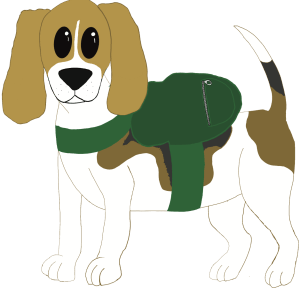
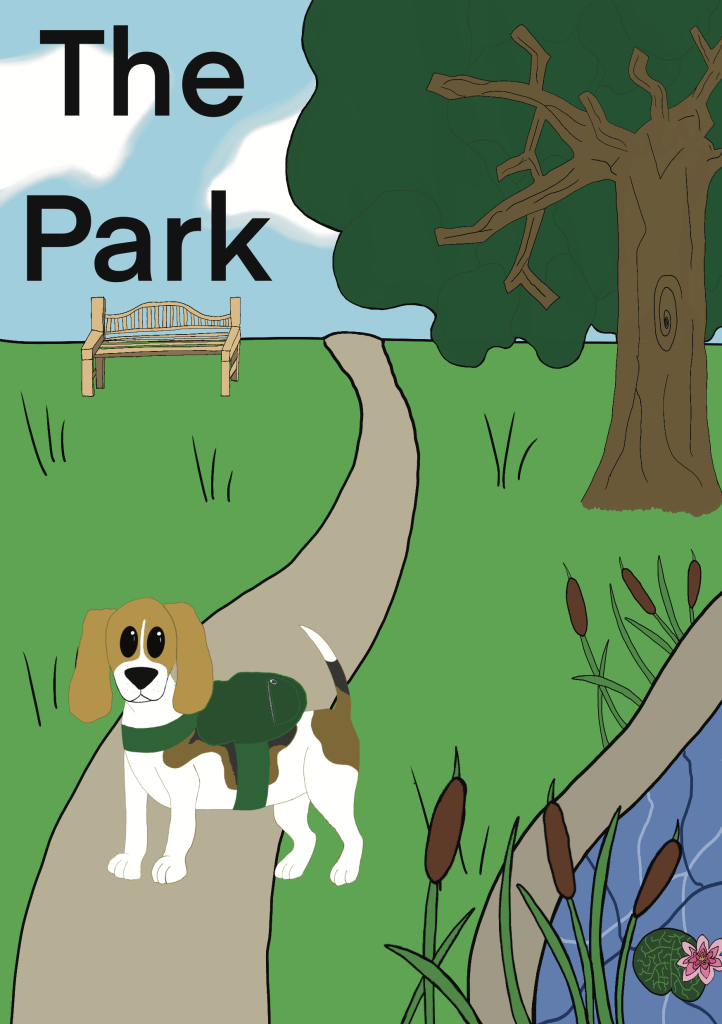
The Green Way Home is a mini board game focusing on environmental pollution and how this can affect animals. Green is a Beagle with a green backpack who navigates between four areas on his journey home; park, beach, town and field, here he meets fellow animals that are stuck in various situations that need solving. Using items that Green picks up on the way around the board he helps to solve these situations.
I started with a big project idea about a Beagle going on an adventure to find his way home, linking it to educational themes in games, particularly sustainability and pollution. I had to significantly condense the concept to fit a mini-game format, making it much shorter and more manageable. I began by brainstorming ideas, drawing on various influences and imagining different pollution scenarios. I also considered how to make the game engaging and appropriate for children aged 10–16.
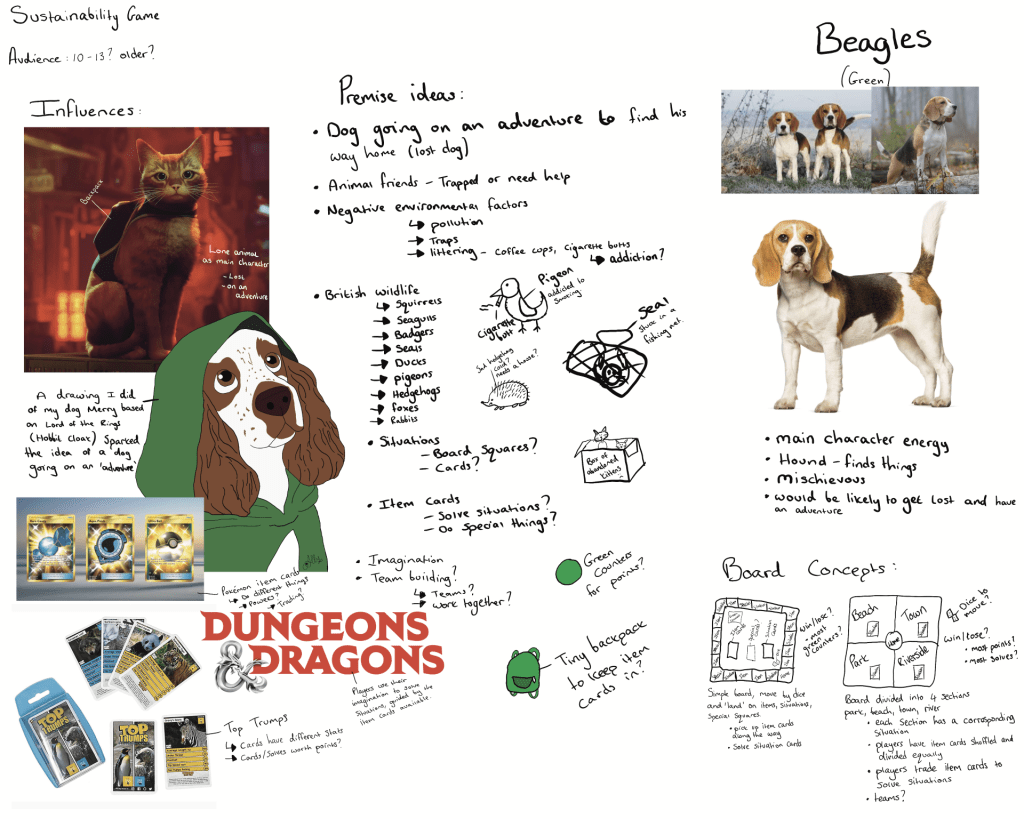
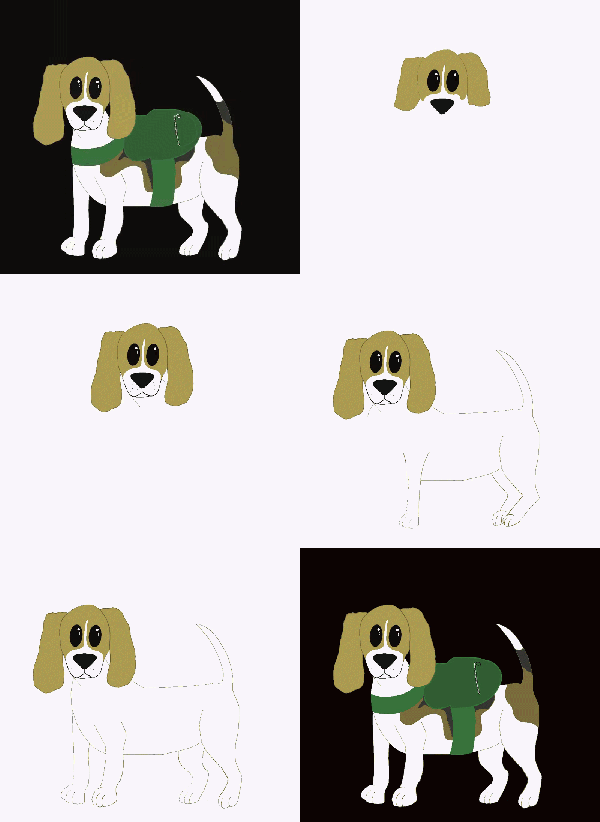
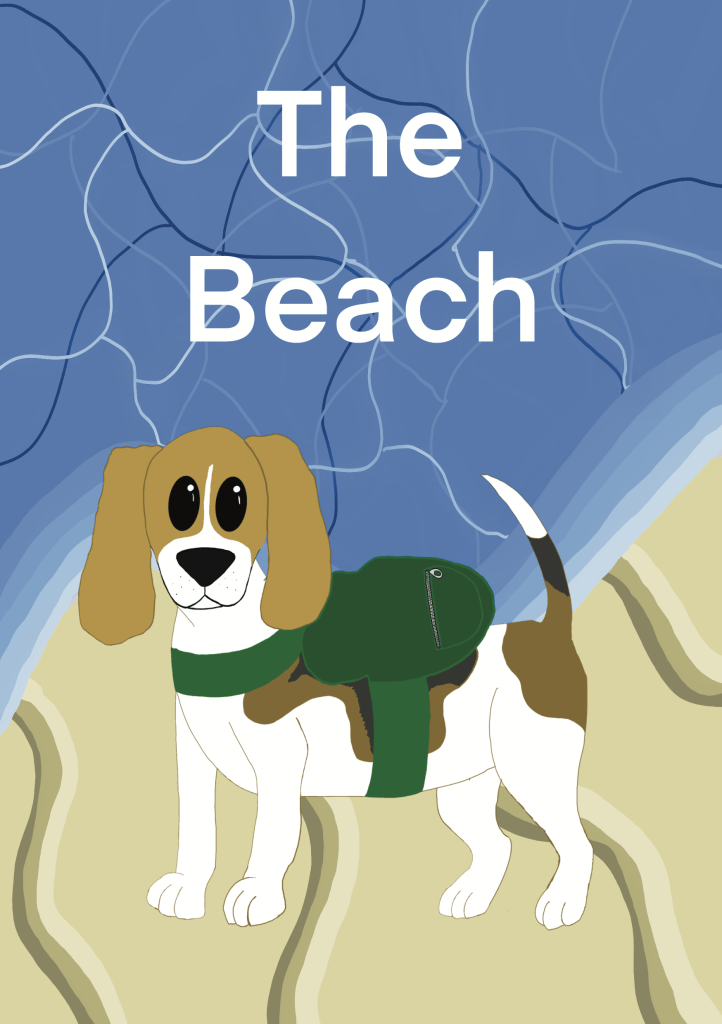
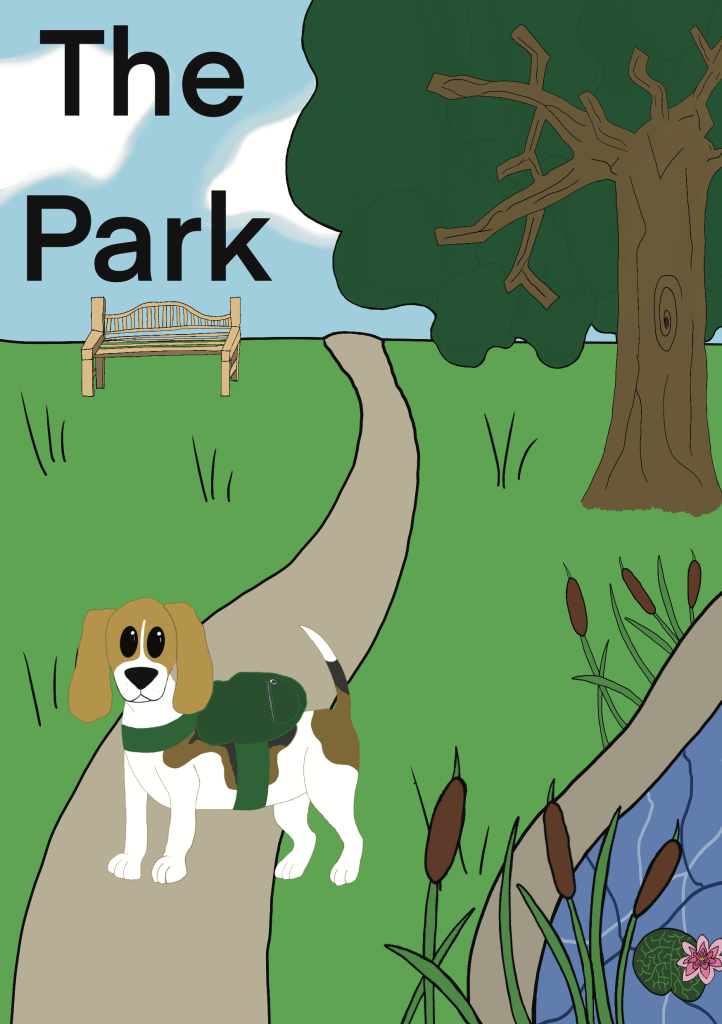
After brainstorming, I had already decided that the main character would be a Beagle named Green. I started drawing him, imagining him with a green backpack and a playful, almost caricature-like style; a big nose, big cute eyes, and all the charm that would make him memorable.
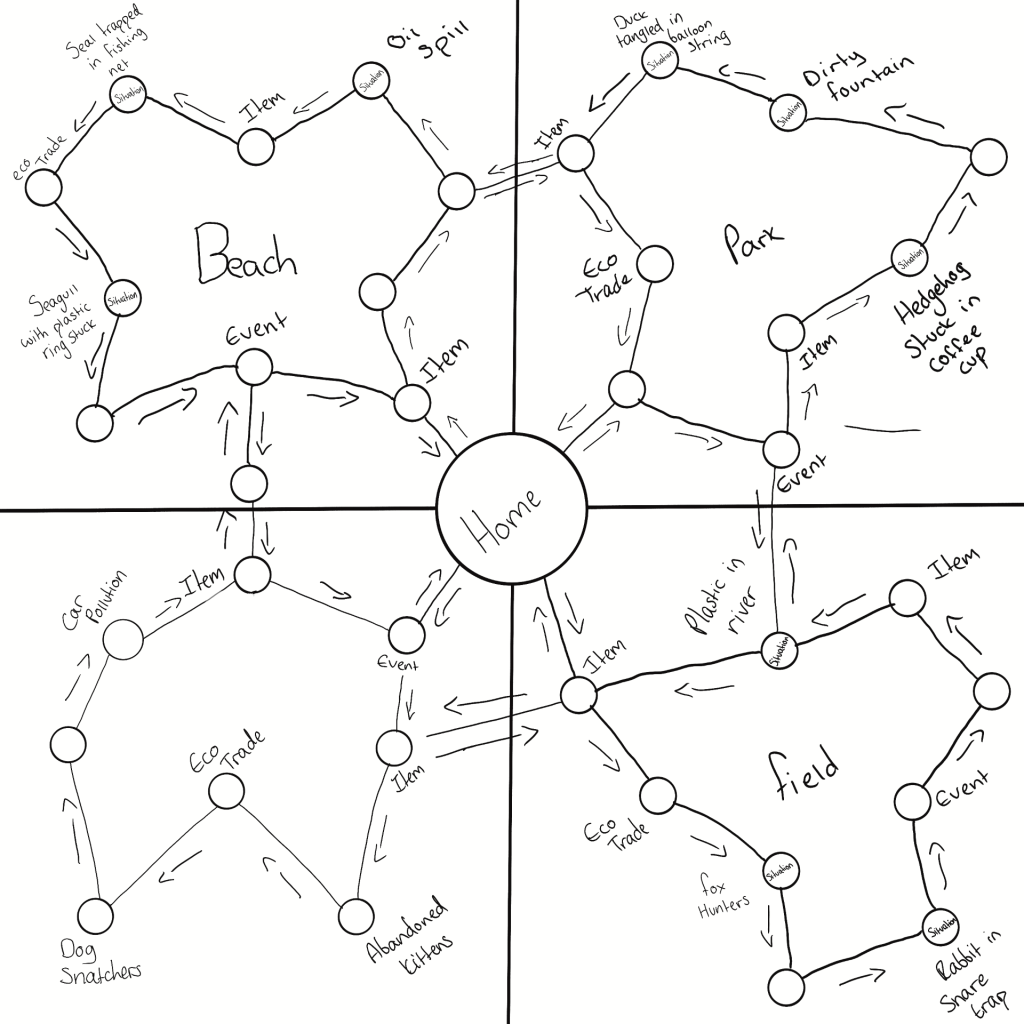
After drawing Green the Beagle, I turned my attention to the game board. I sketched out a few layout options and started designing the cards, thinking about how each element would work together in gameplay. I decided on a four section approach with four different locations to move between. I also decided to add educational facts to the bottom of all the cards in the game.
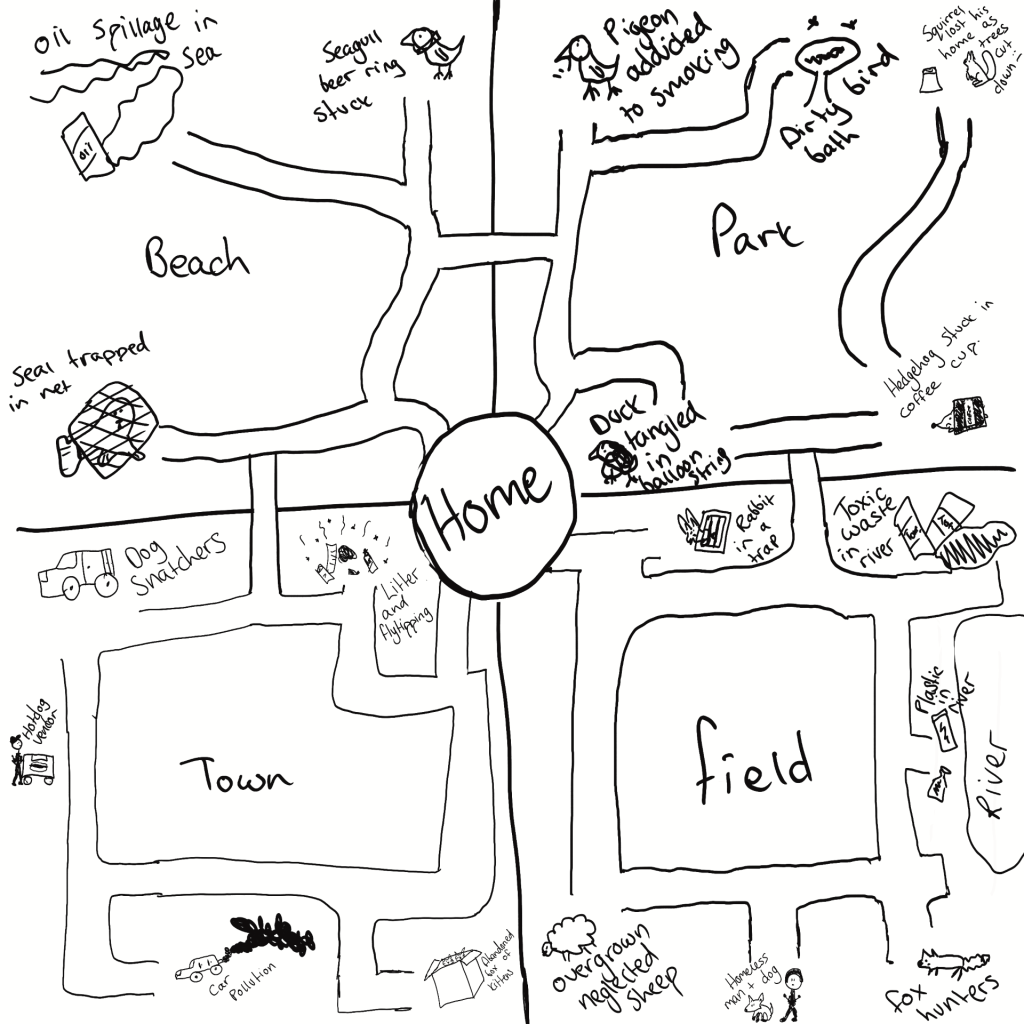
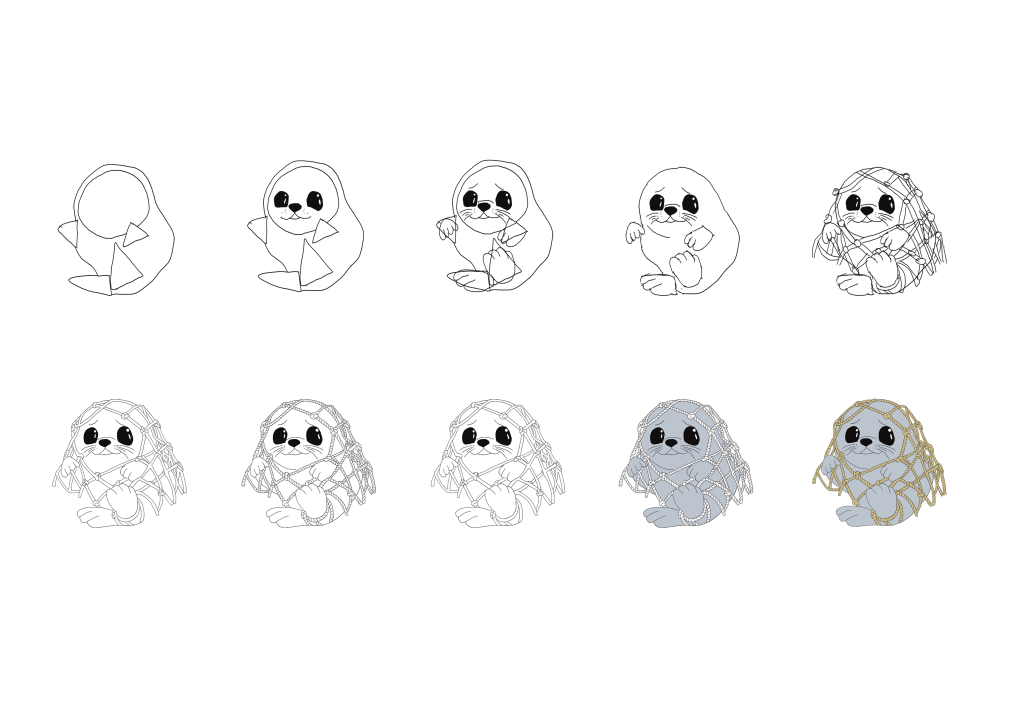
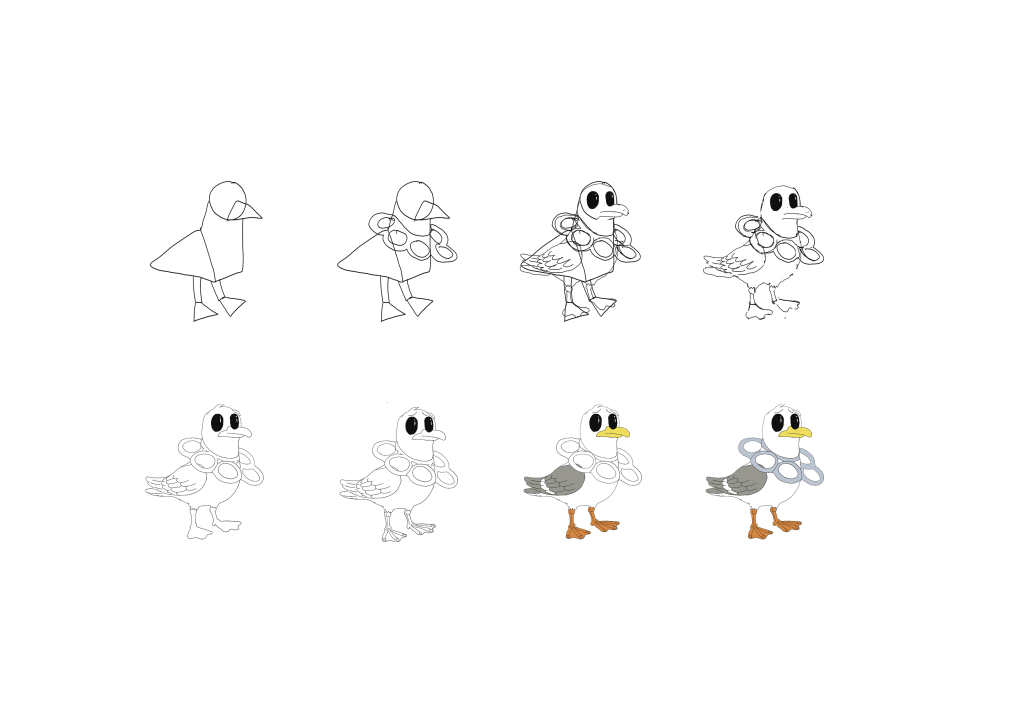
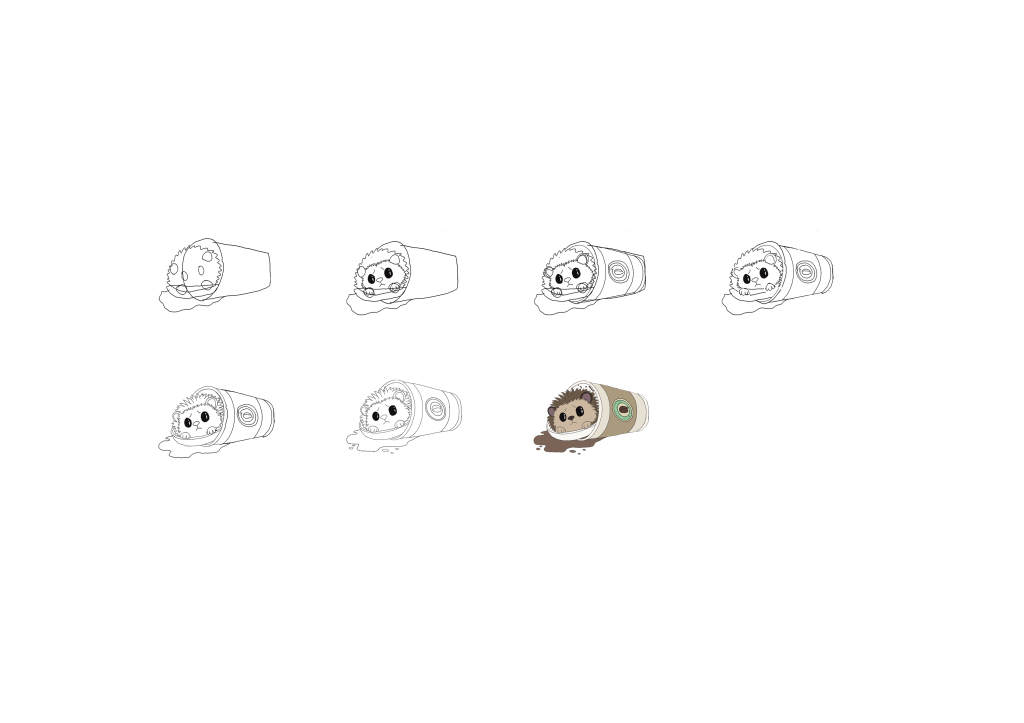
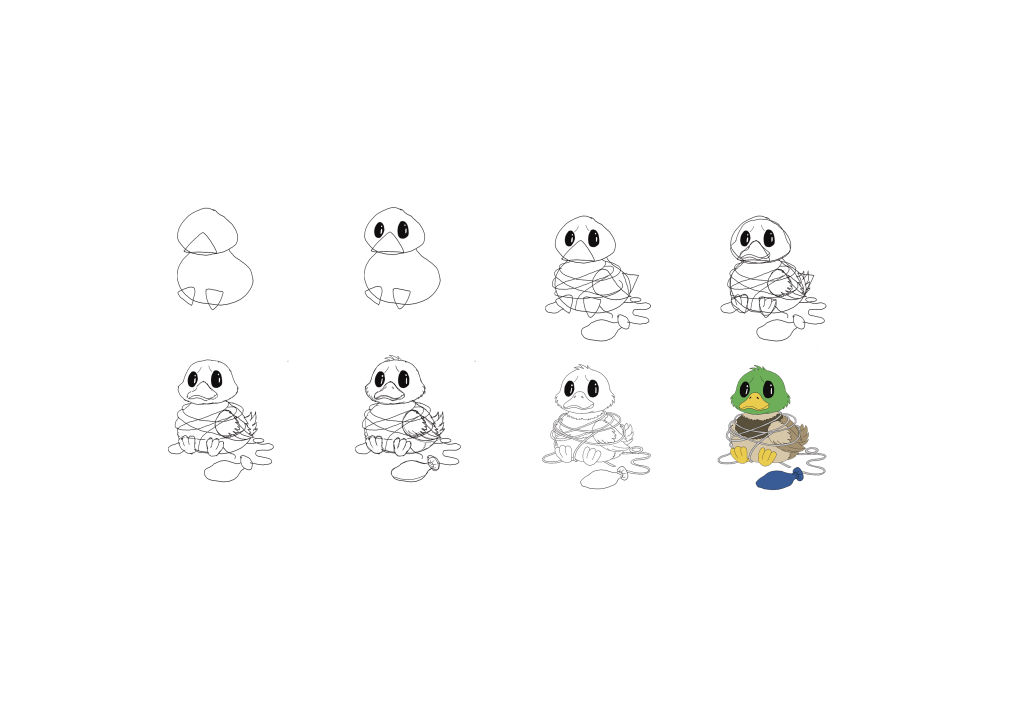
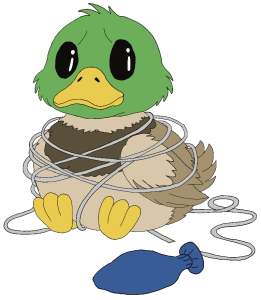
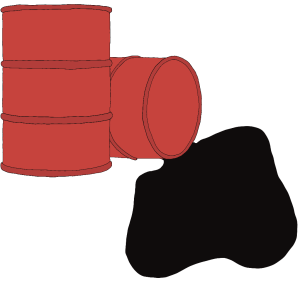
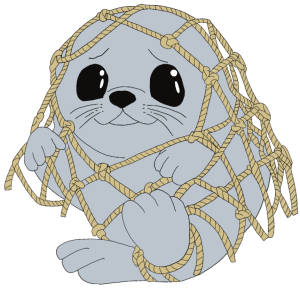
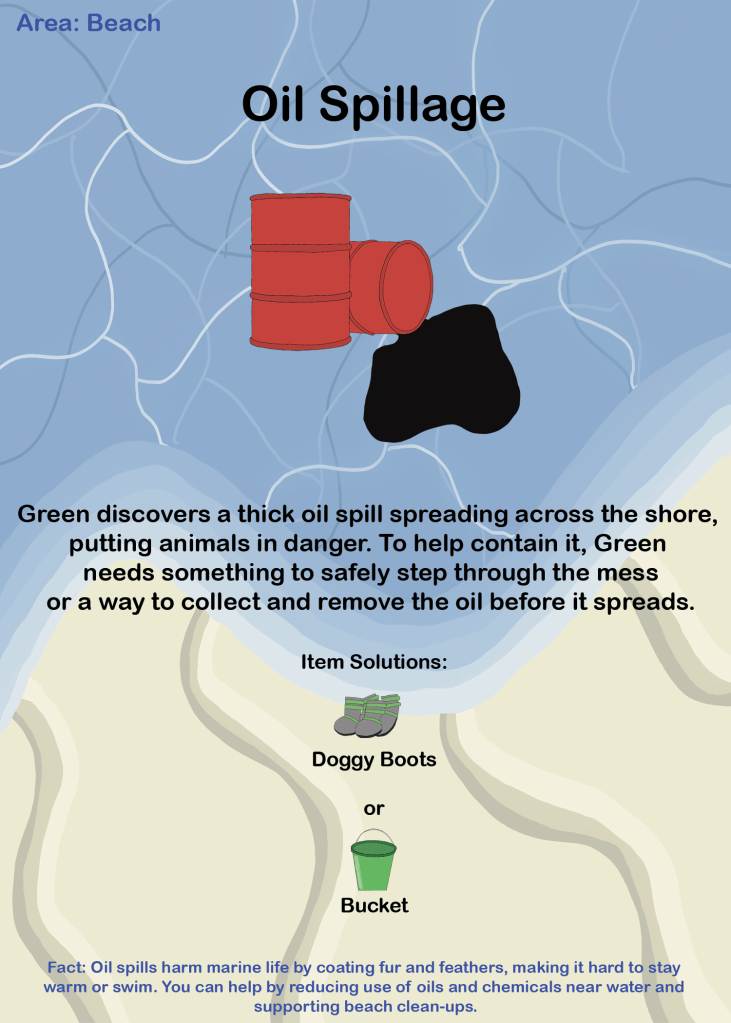
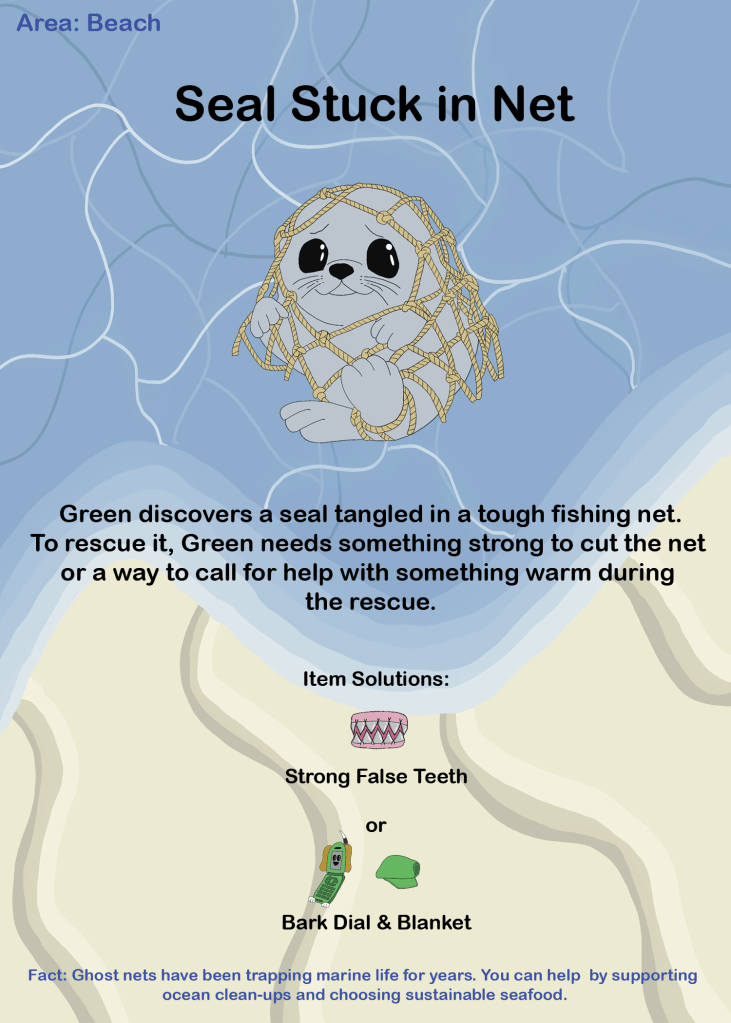
Next, I started drawing the characters and objects for my “scenario cards,” all centered around pollution. These included a seagull with a plastic ring around its neck, a hedgehog trapped in a coffee cup, a seal tangled in a net, and a duck caught in a balloon string. I also illustrated environmental issues like an oil spill, a dirty fountain, and plastic bottles in the river. Other scenarios showed a rabbit caught in a snare trap, a fox pursued by illegal hunters, an abandoned box of kittens, dog snatchers, and car exhaust.
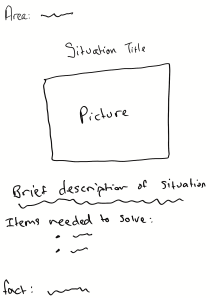
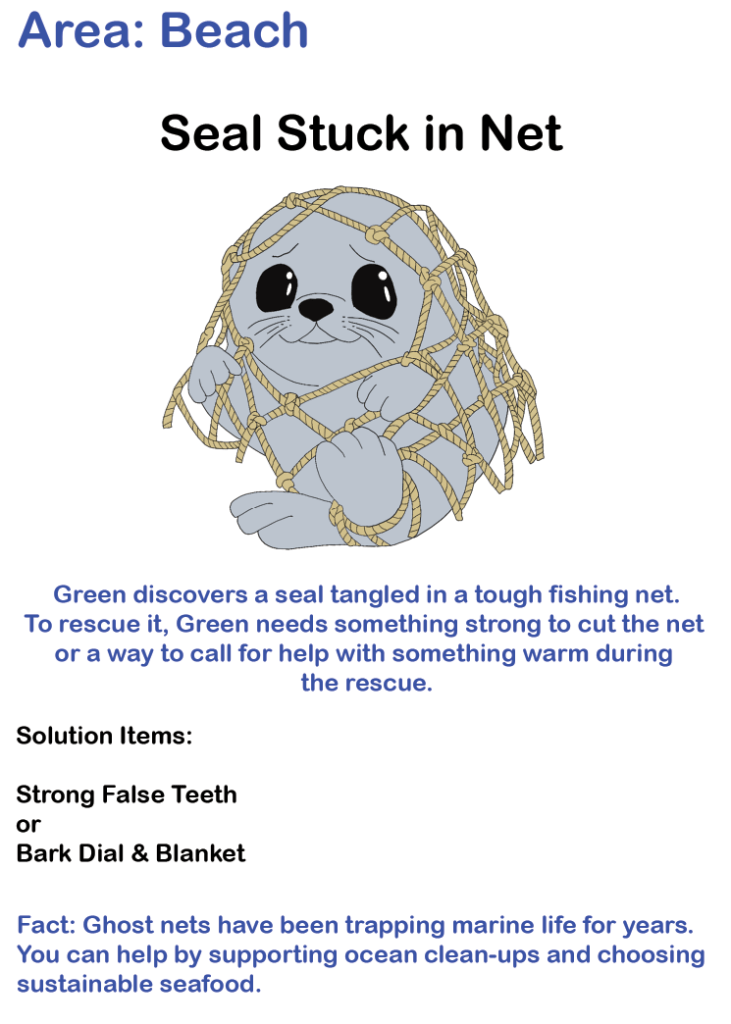
Next, I thought about how the scenario cards themselves would look. My first design was pretty basic, just a white card with text, but I quickly added an educational fact at the bottom, a brief description of the scenario, and the items players would need to solve it. I decided each card would have a design reflecting its area, like the beach, park, field, or town, which helped tie the visuals to the gameplay. I also added tiny thumbnails of the items needed to solve each scenario, which made the cards more visually appealing.
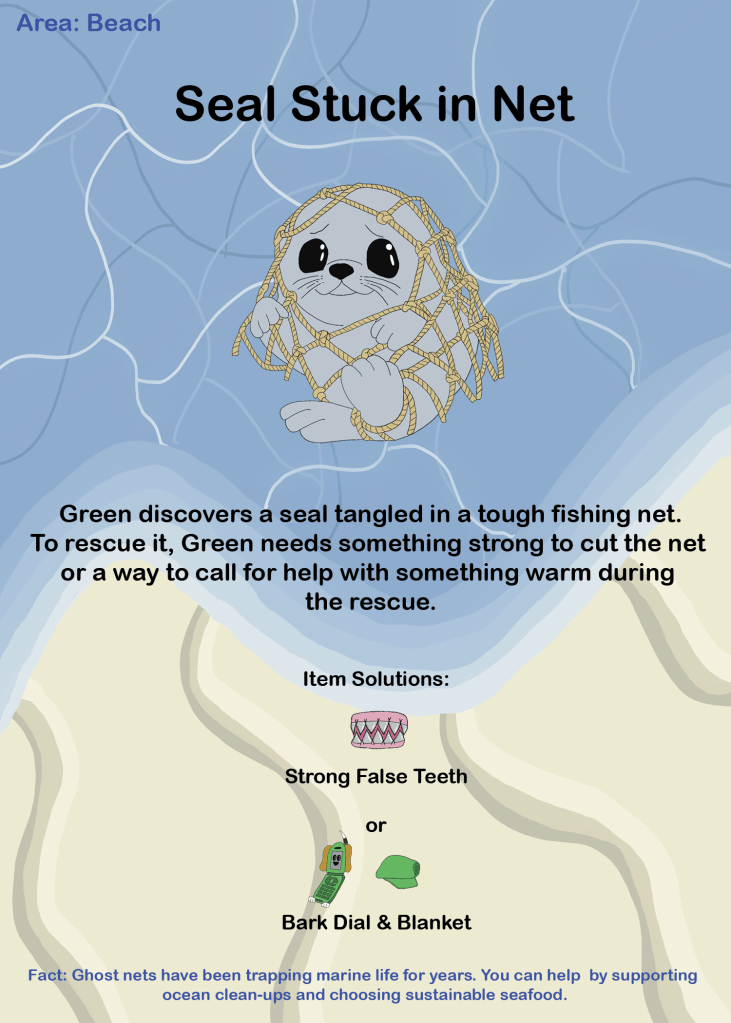
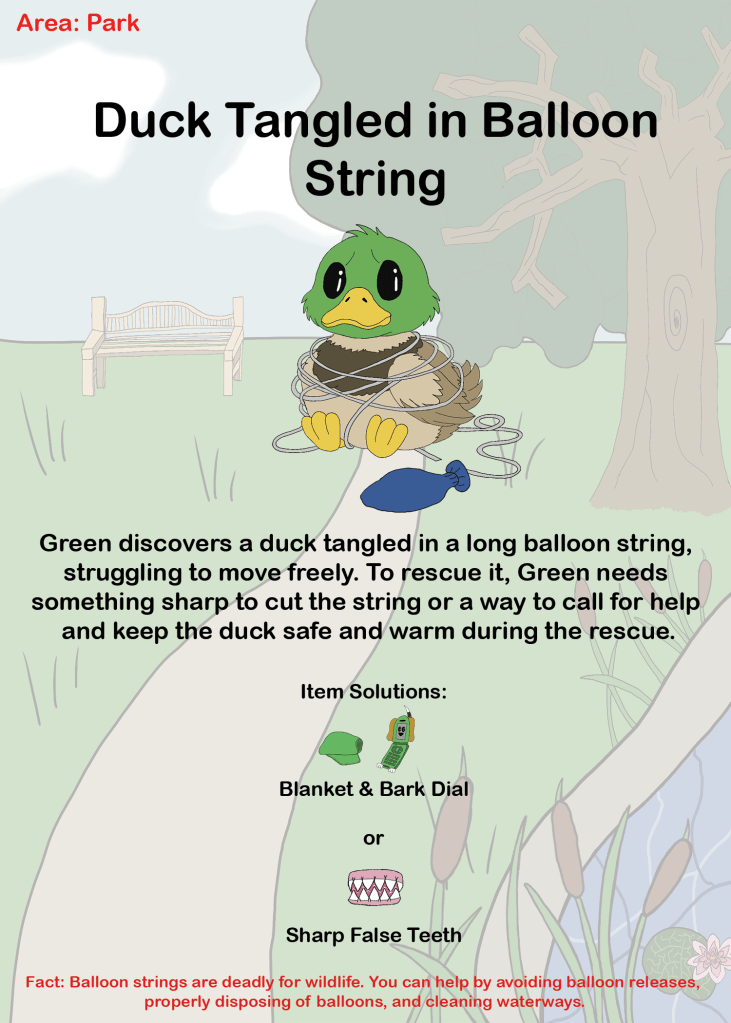
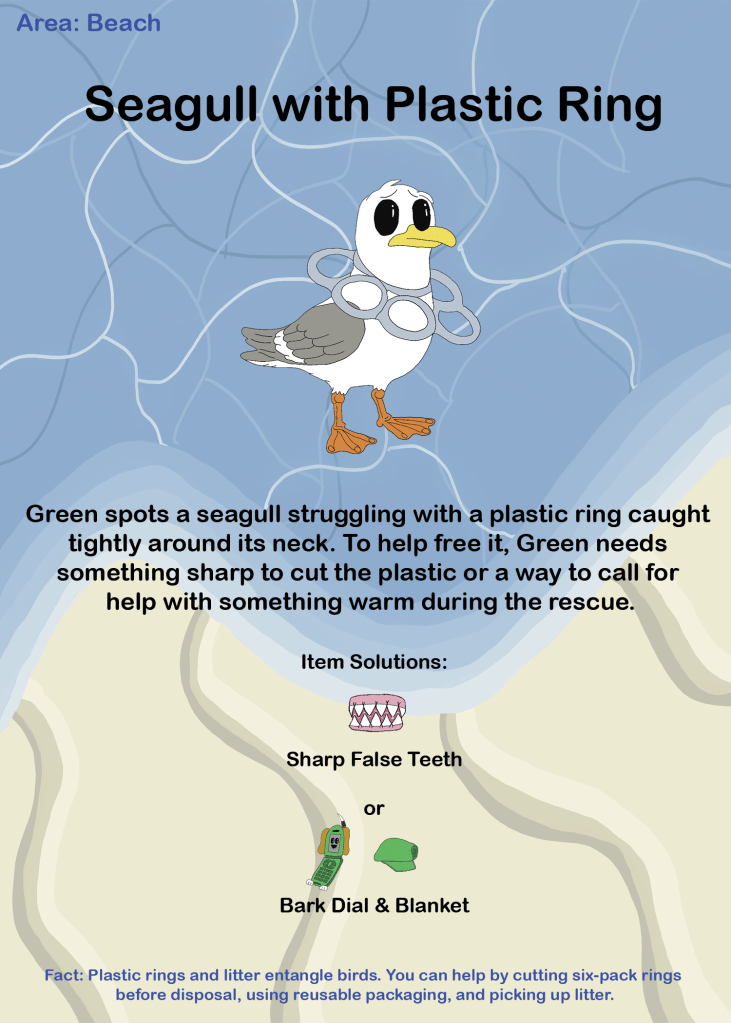
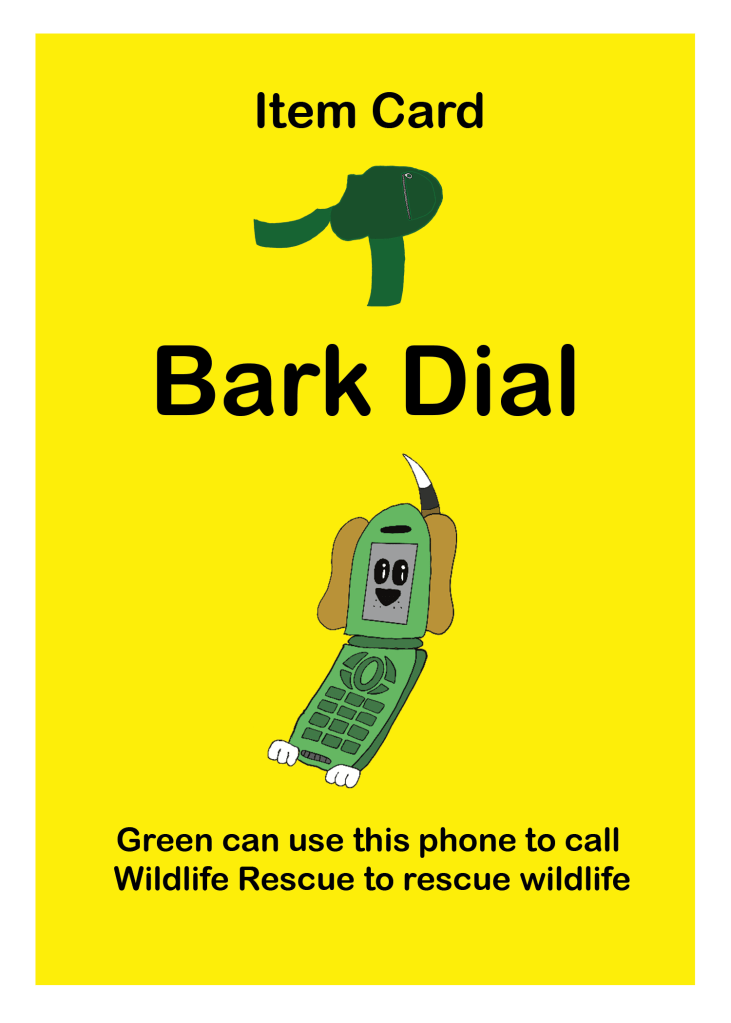
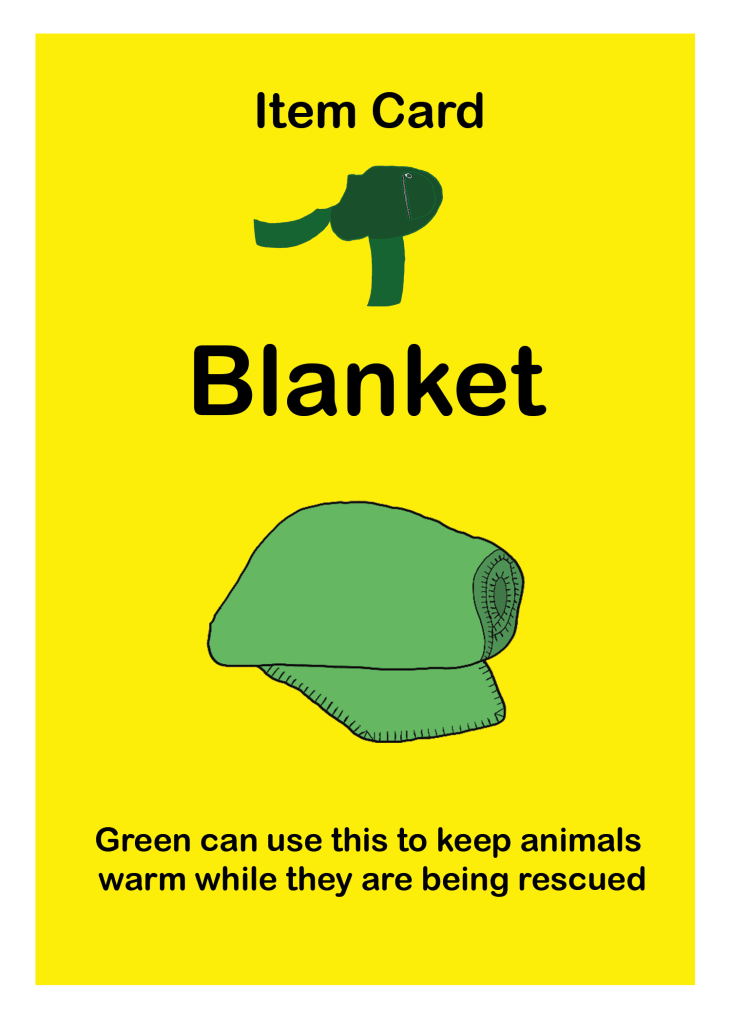
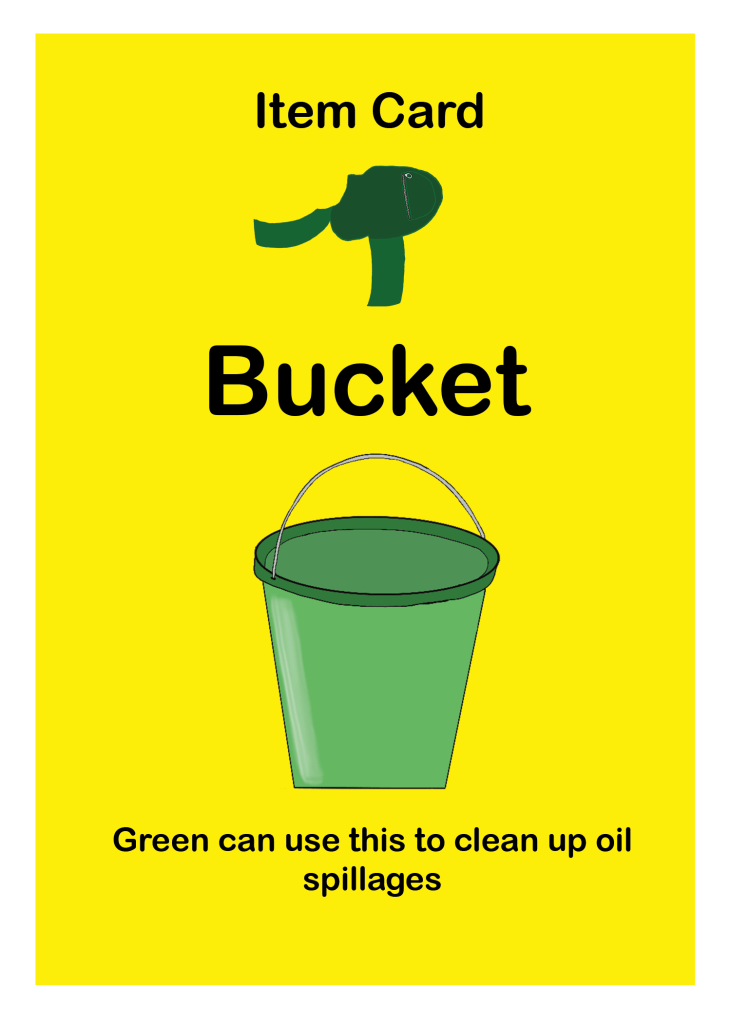
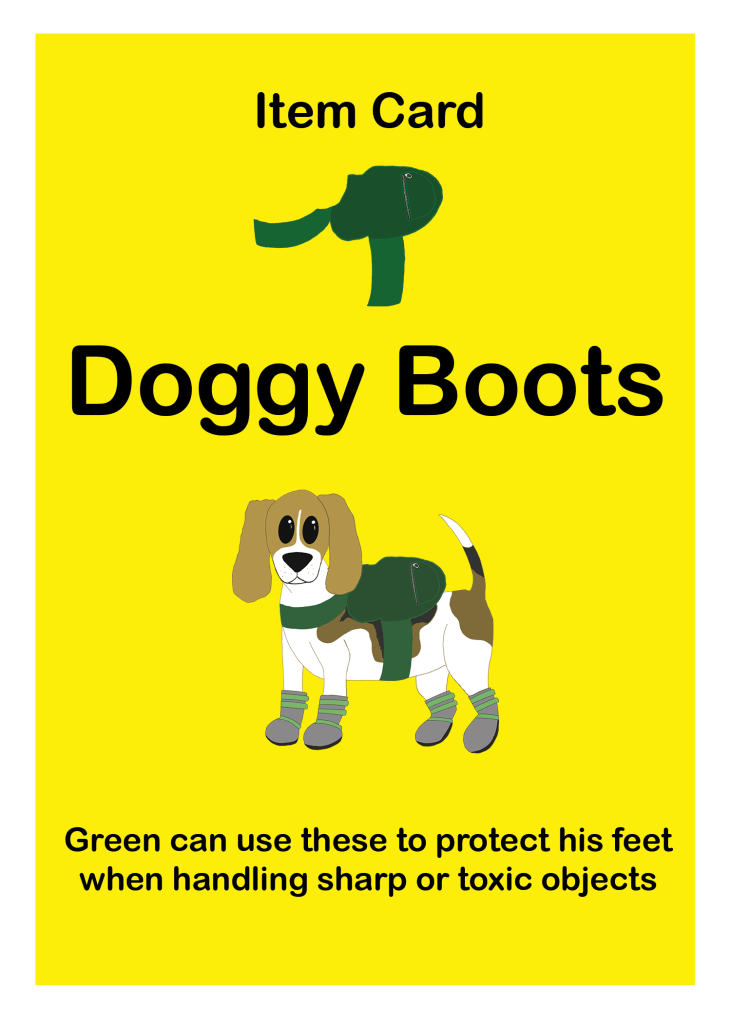
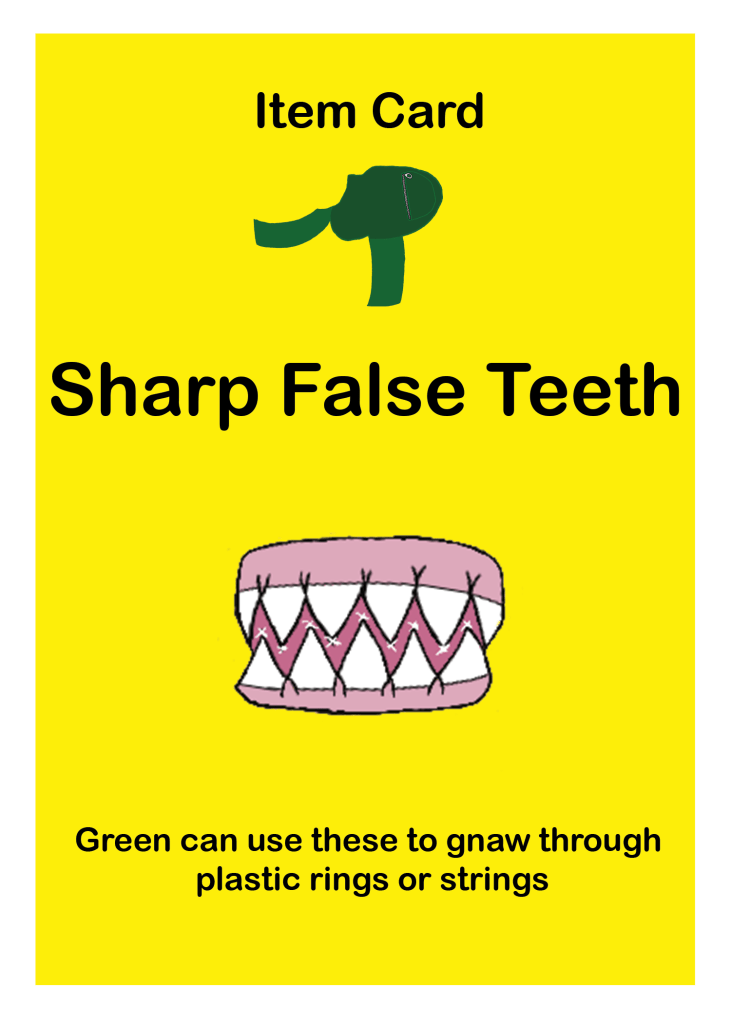
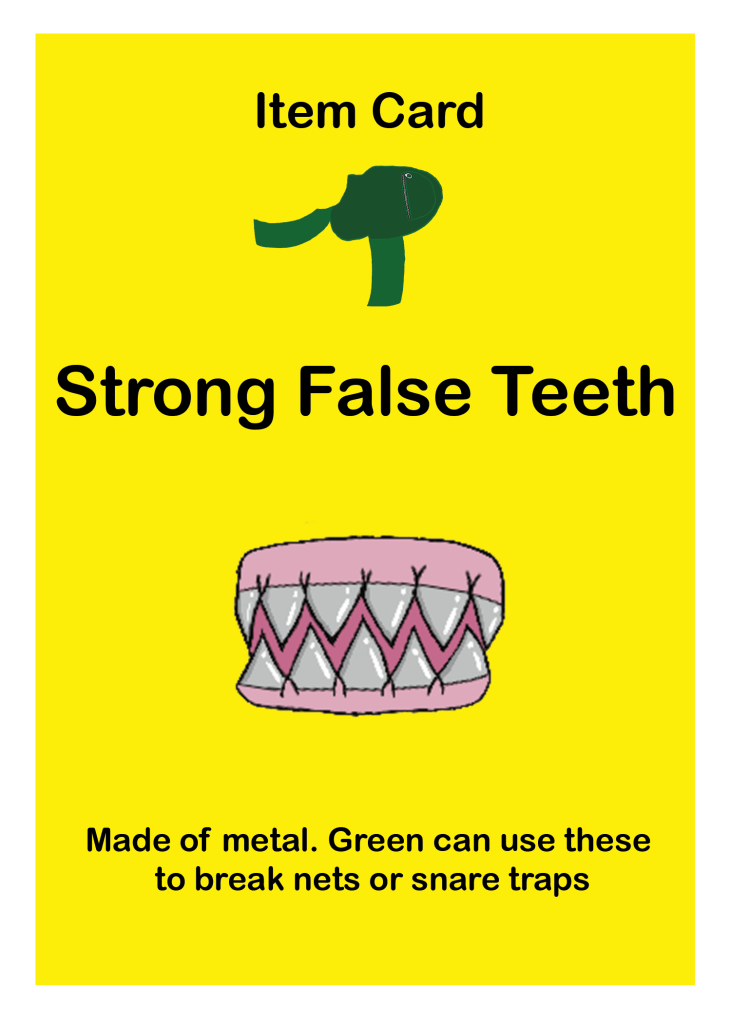
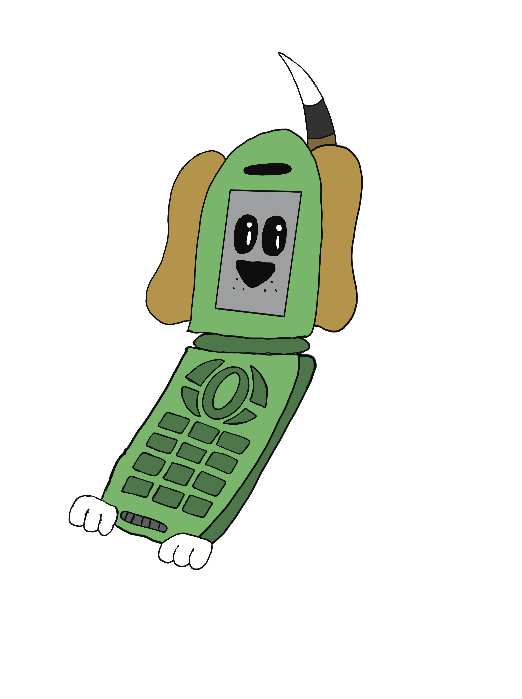
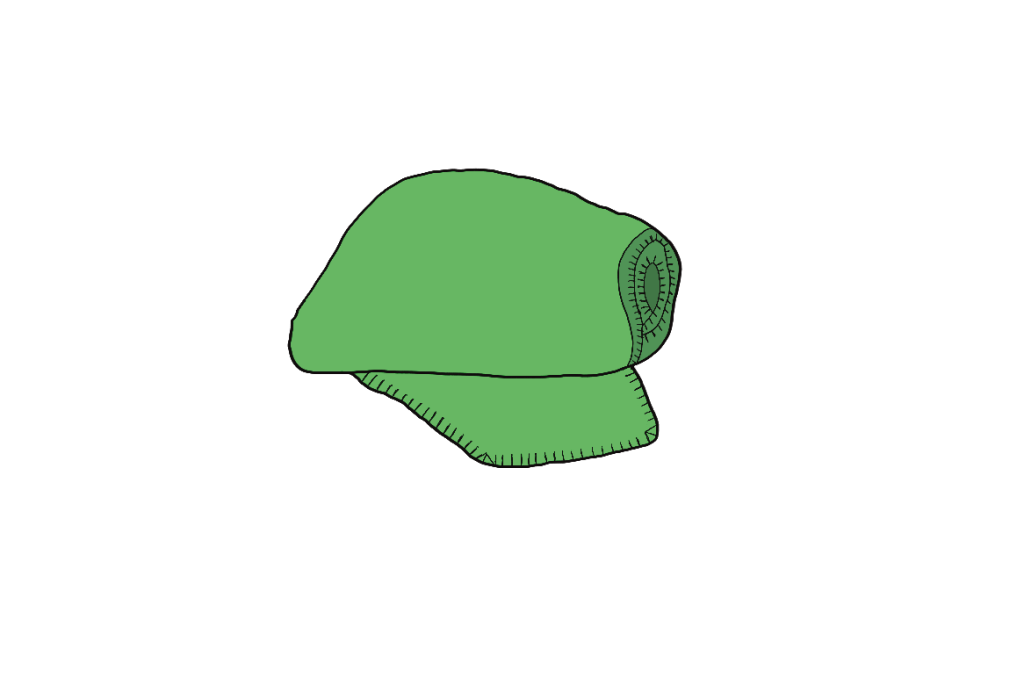
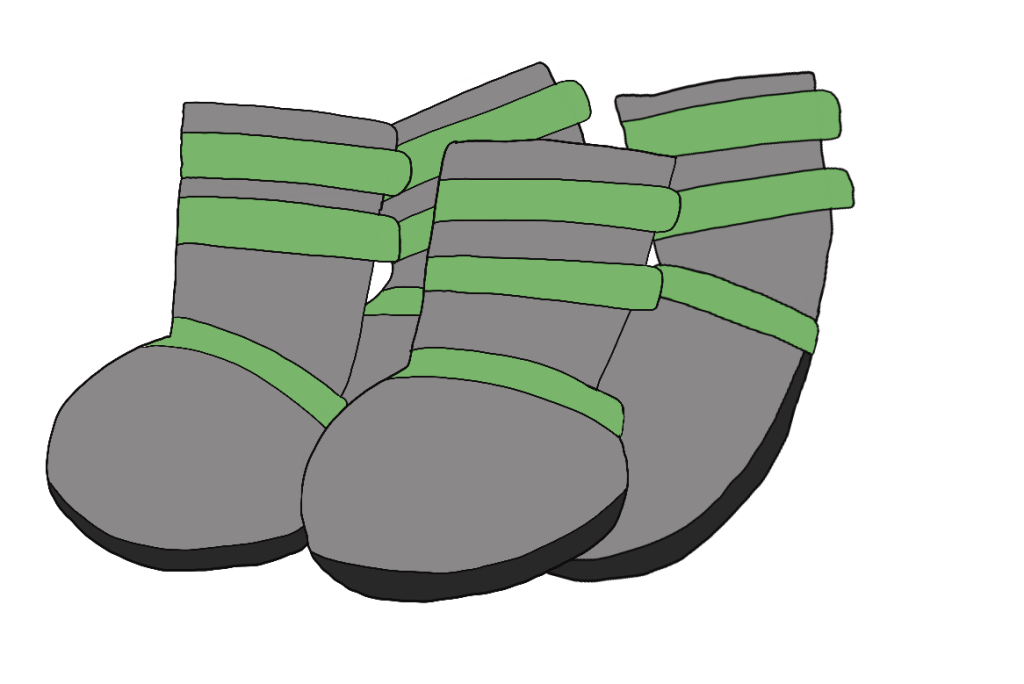
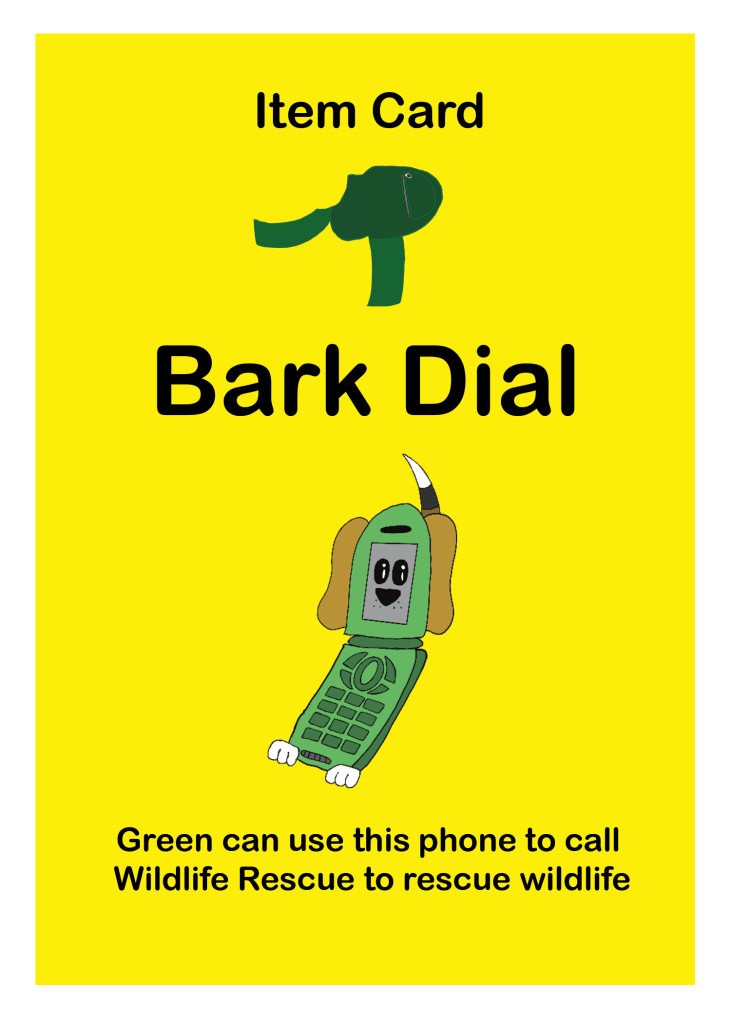
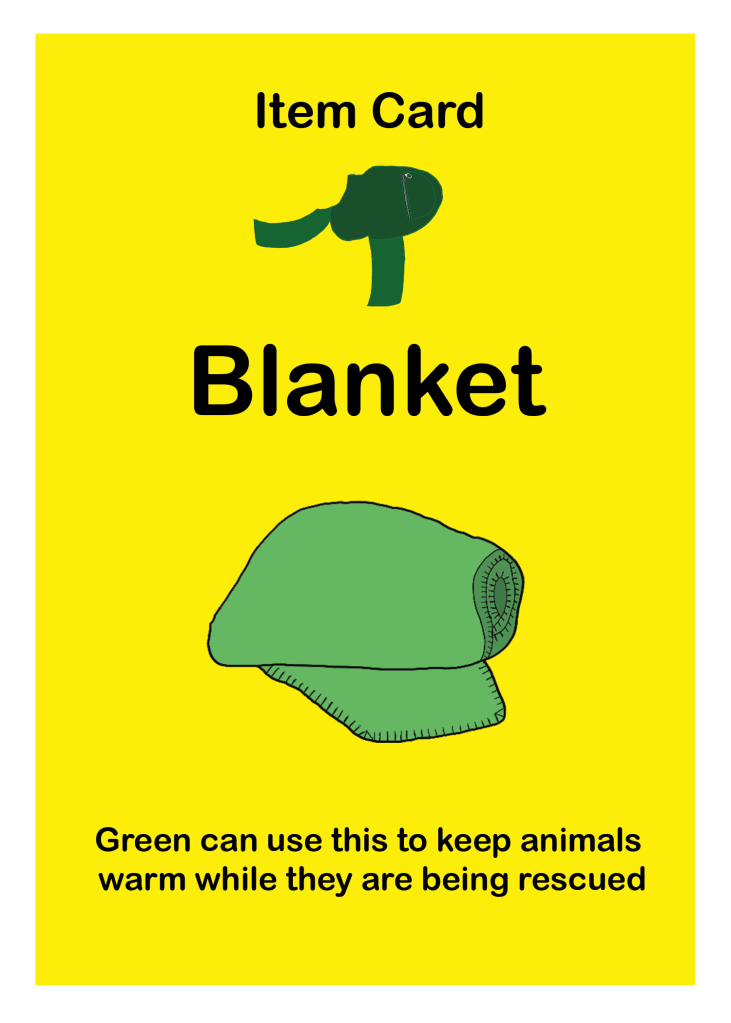
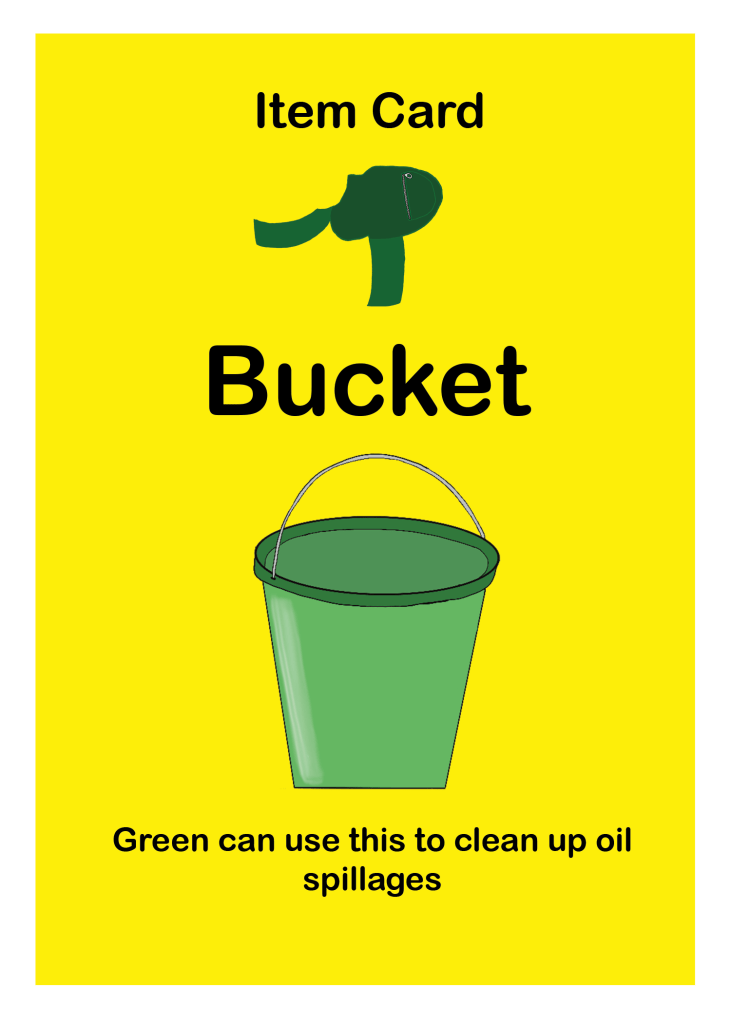
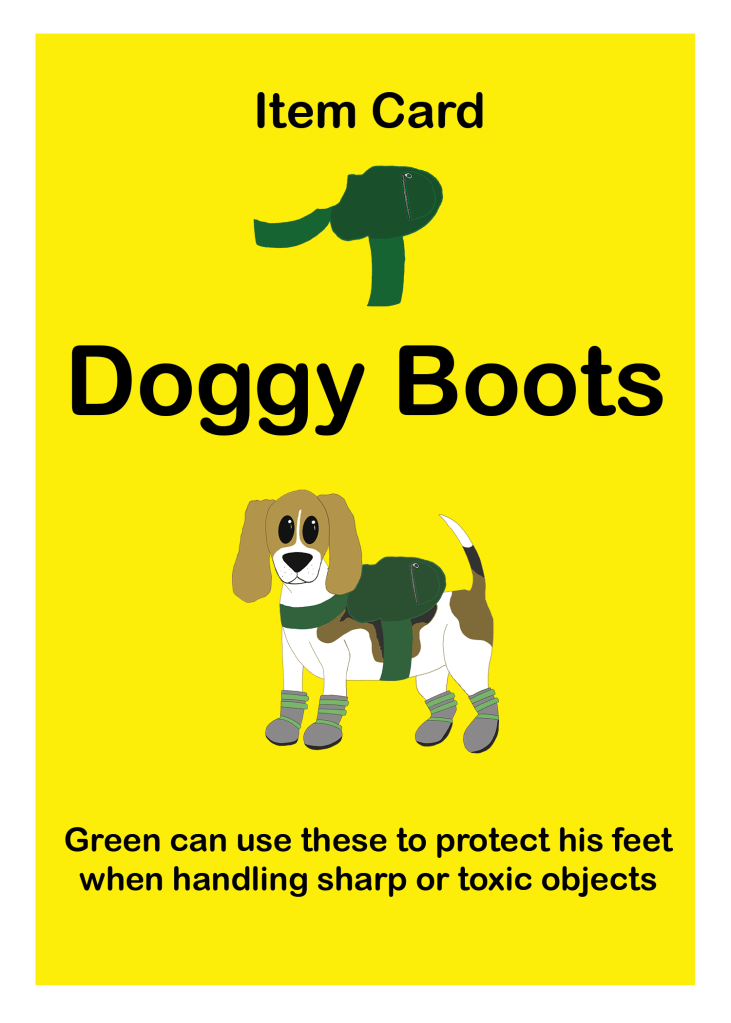
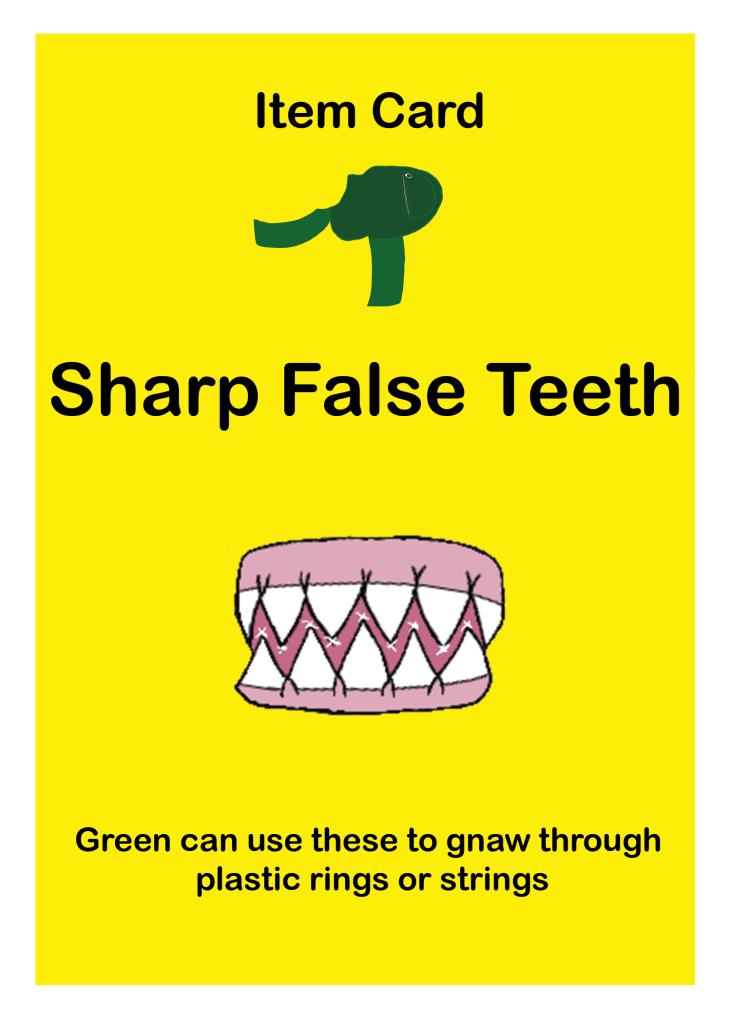
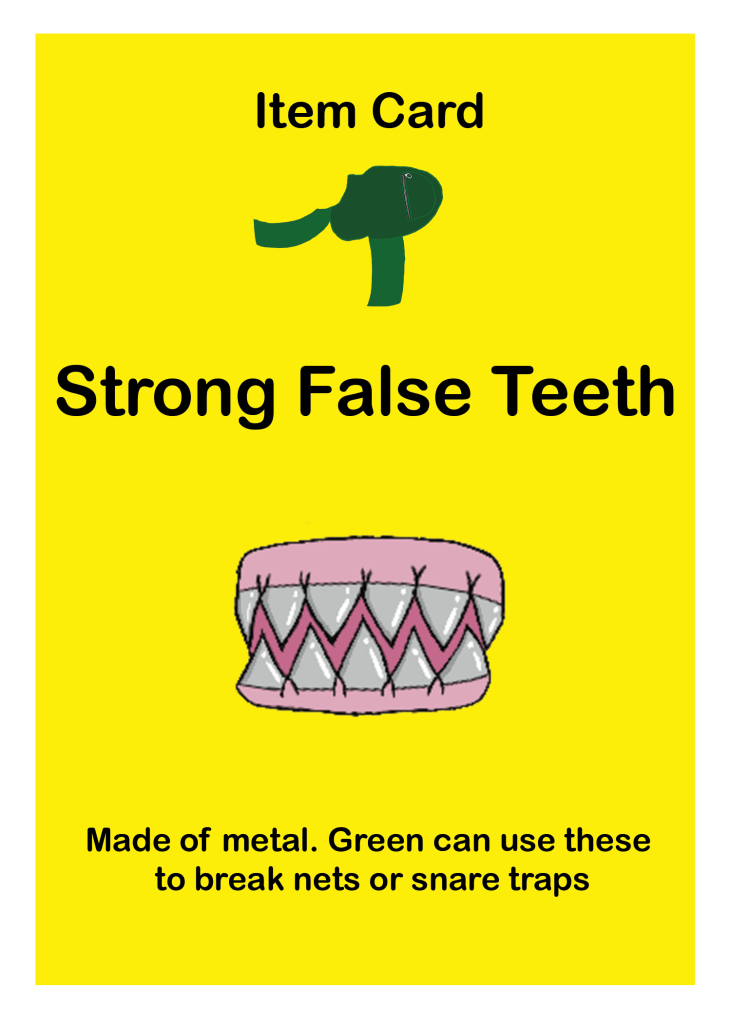
In order to include thumbnails of the items on the scenario cards, I needed to actually draw the items too. So I got to work creating them, including doggy boots, sharp false teeth, strong false teeth, a blanket, a magic recycling bag, a bucket, a net, a bark dial (phone), super bark, a glow-in-the-dark collar, and a magic sniffer mask.
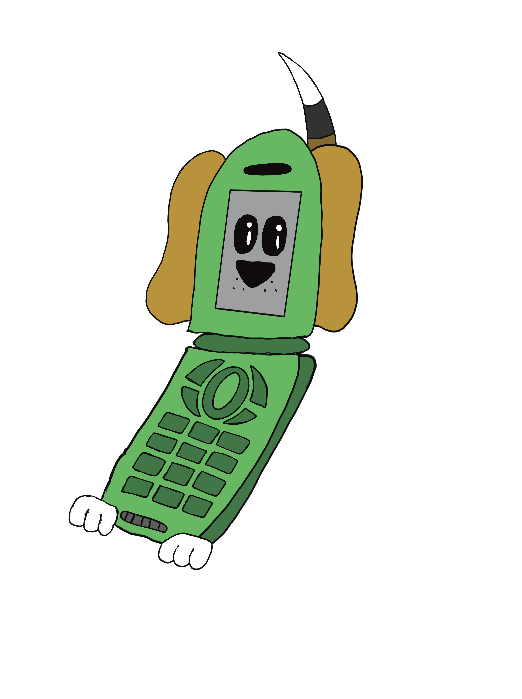
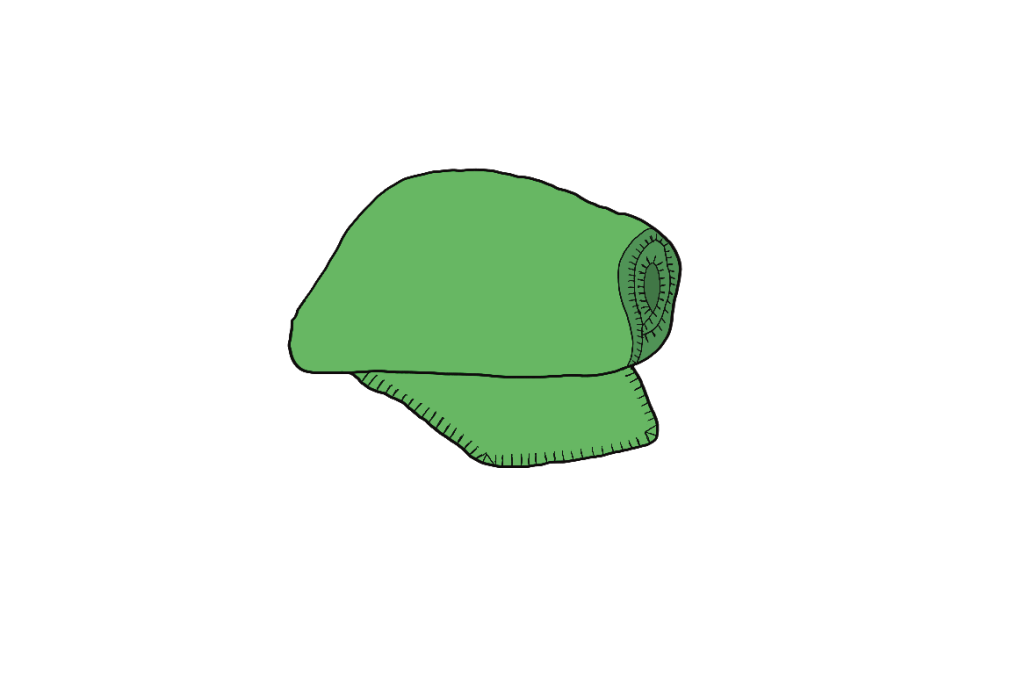

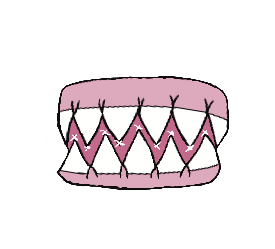
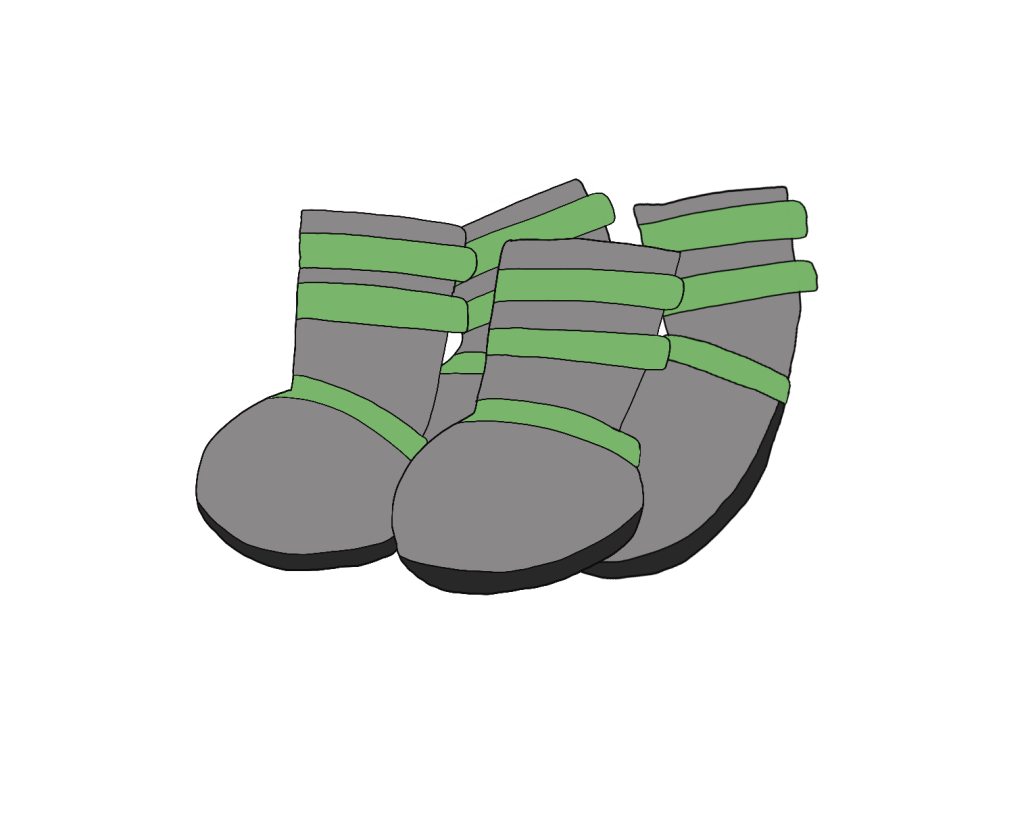
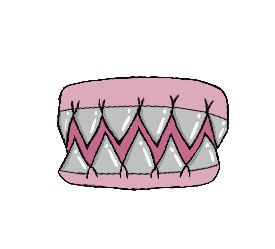
I then turned these into the final item cards, and added thumbnails of each item to their corresponding scenario cards so everything linked together clearly.





 Ally Dawson